10 Interesting Facts About Photography: A Sourced Timeline
learning and development

Photography developed through centuries of experiments with light, chemistry, optics and electronics. It did not begin with a single modern camera, and some of its best-known “firsts” need careful qualification.
This sourced timeline explains ten interesting facts about photography, including how early images were made, why historical flash powder was dangerous and how digital cameras record useful information alongside each picture.
Photography milestones at a glance
| Date | Milestone | Why it matters |
|---|---|---|
| Ancient period | Camera-obscura principle documented | Established how light passing through a small opening can project an inverted scene. |
| c. 1826–1827 | Niépce made View from the Window at Le Gras | It is the earliest surviving photograph produced in a camera. |
| c. 1838 | Daguerre photographed the Boulevard du Temple | The image appears to contain two of the earliest recorded human figures. |
| 1839 | Robert Cornelius made a self-portrait | It is among the earliest photographic portraits and self-portraits. |
| 1861 | Maxwell and Sutton demonstrated three-colour photography | They used separate red, green and blue filtered images to reproduce colour. |
| 1888 | The name Kodak entered the market | Eastman selected a short, distinctive invented word. |
| 1969 | The CCD concept was devised | This light-sensitive electronic technology became important to digital imaging. |
| 1999–2000 | Commercial camera phones emerged | Different models were “first” under different definitions. |
| 2025 | A 5,707-camera collection set a Guinness record | It replaced older figures still repeated in photography listicles. |
1. The camera obscura is far older than photography
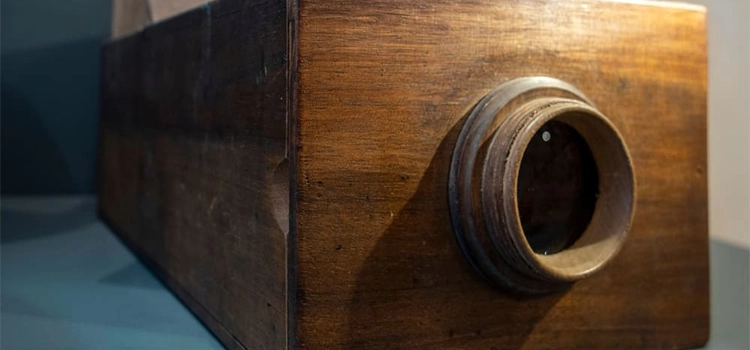
A camera obscura is a darkened room or box with a small opening. Light passing through the opening projects an inverted view of the outside scene onto the opposite surface. It does not preserve that view by itself, but it provided an important optical foundation for the later camera.
The principle was discussed by thinkers in several cultures over many centuries. The Chinese philosopher Mozi described an inverted image formed by light travelling through an opening, while the Arab scholar Ibn al-Haytham later investigated image projection and optics systematically. The camera obscura was subsequently used as an aid to observation and drawing.
2. The earliest surviving camera photograph is on a pewter plate
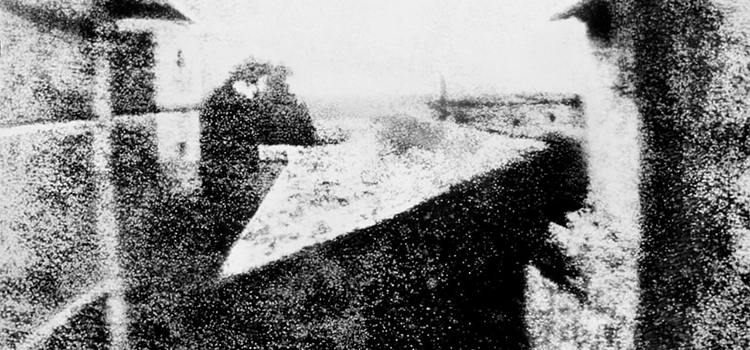
Joseph Nicéphore Niépce made View from the Window at Le Gras in France around 1826–1827. According to the Harry Ransom Center, Niépce coated a pewter plate with bitumen of Judea and created the image after several days of exposure in a camera obscura.
Light hardened parts of the bitumen, while less-exposed material could be removed to reveal the image. The result was a unique heliograph formed directly on the plate—not a picture transferred from that plate onto paper. Its exceptionally long exposure also helps explain why sunlight appears to illuminate both sides of the buildings.
The date is normally expressed as a range because the surviving evidence does not establish one uncontested year. Likewise, older accounts sometimes give much shorter exposure estimates, but the holding institution’s current description states that the exposure lasted several days.
3. A shoe-polishing scene may have produced an early photograph of people
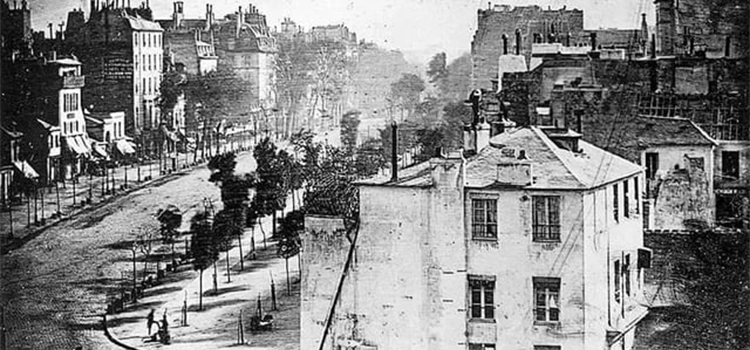
Louis Daguerre’s view of the Boulevard du Temple in Paris, generally dated to about 1838, required a long exposure. Most moving pedestrians and vehicles therefore failed to register clearly. Near the lower-left corner, however, the image appears to show a person standing still while having his shoes polished, along with the person performing the service.
The identities and precise circumstances are unknown, so it would be misleading to invent a story about why either figure was there. The Bavarian National Museum’s collection record for Boulevard du Temple catalogues Daguerre’s triptych and dates it to around 1838. A history of early photography from Museumsstiftung Post und Telekommunikation describes the shoe shiner and customer as the earliest known people pictured in a photograph. Because early photographic “firsts” often depend on survival, dating and definition, it is more cautious to describe them as among the earliest recognisable human figures in a photograph.
4. Early flash powder was hazardous and highly explosive
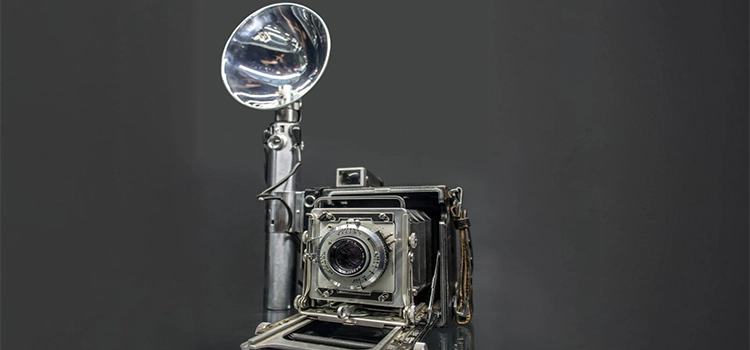
Before convenient flashbulbs and electronic flashes, photographers used chemical mixtures to generate a brief, intense light. Some late-19th-century flash powders combined powdered magnesium or aluminium with an oxidiser such as potassium chlorate.
Potassium chlorate is not potassium chloride: they are different compounds with very different properties. Chlorate-based mixtures can ignite through heat, friction or impact. Historical flash powders caused serious fires and injuries, and safer formulations and technologies gradually replaced them.
Safety note: this is historical information, not a recipe. Never make, mix, store or ignite flash powder. Explosive and pyrotechnic materials require suitable controls, competence and legal authorisation. The UK Health and Safety Executive explains the applicable workplace framework in its current L150 guidance on the Explosives Regulations 2014. Anyone dealing with explosives must obtain advice relevant to the material, activity and jurisdiction from the appropriate regulator and a competent professional.
5. Maxwell devised the famous 1861 colour experiment; Sutton took the photographs
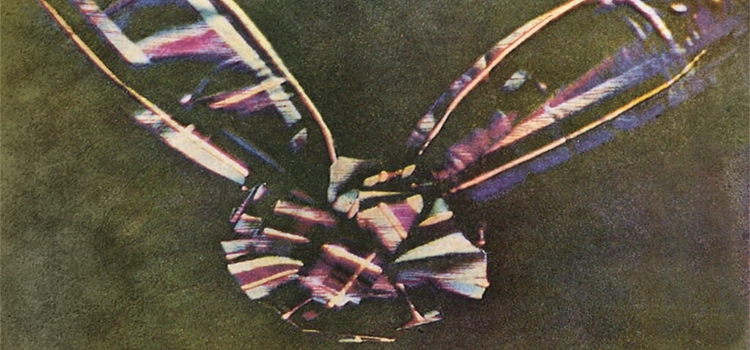
The well-known tartan-ribbon demonstration involved two distinct contributions. Physicist James Clerk Maxwell devised the experiment to demonstrate additive colour reproduction, while photographer Thomas Sutton took three black-and-white photographs of the ribbon through red, green and blue filters.
The three images were then projected through corresponding coloured filters and superimposed on a screen. The reconstruction was imperfect because the photographic materials did not respond evenly to the required colours, but the experiment demonstrated an influential principle behind colour imaging and displays. The National Science and Media Museum provides further context about the experiment and explains that it is commonly called the first colour photograph.
6. “Kodak” was deliberately invented as a name
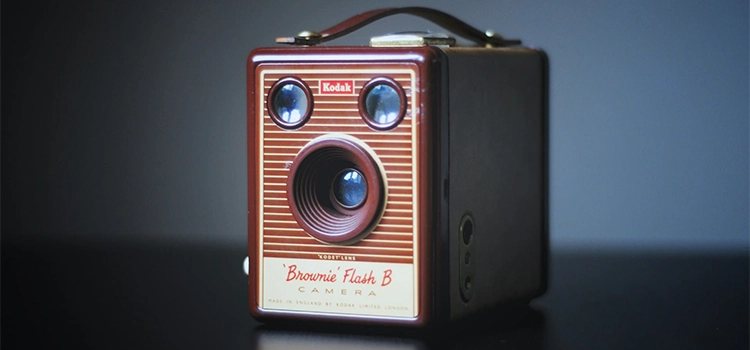
George Eastman did not choose Kodak because it described a photographic process or carried a hidden historical meaning. Eastman explained that he liked the letter K and wanted a trademark that was short, vigorous, easy to pronounce and unlike existing words.
The company’s account of George Eastman’s history says the name was devised with his mother using an anagram set. The resulting invented word became associated with the Kodak camera introduced in 1888 and the slogan “You press the button, we do the rest.”
The naming decision was practical as well as memorable. An invented term was easier to distinguish as a trade name than an ordinary descriptive word, while its short spelling worked well on cameras, packaging and advertising.
7. Retouching existed long before Photoshop
Photographic manipulation is nearly as old as photography. Before digital software, practitioners altered negatives and prints by painting, scratching, combining negatives, masking areas during printing or using airbrushes. Portrait studios also softened skin, removed blemishes and adjusted backgrounds by hand.
A prominent early example is Oscar Gustave Rejlander’s 1857 work The Two Ways of Life, assembled from more than 30 separate negatives. The Metropolitan Museum of Art’s collection record identifies it as an albumen silver print made from multiple negatives. Digital editing made alteration faster and more accessible, but it did not invent the idea.
This history is also a useful reminder that a photograph has never automatically been a neutral record. Choices about framing, exposure, staging, printing and editing can all influence what viewers see, even when no objects are digitally added or removed.

8. Digital image sensors grew from a 1969 invention
Willard Boyle and George E. Smith devised the charge-coupled device, or CCD, at Bell Labs in 1969. A CCD converts incoming light into electrical charges that can be measured and assembled into a digital image. The invention became important in scientific, astronomical and consumer cameras.
Boyle and Smith shared half of the 2009 Nobel Prize in Physics for inventing an imaging semiconductor circuit—the CCD sensor. Most current phone cameras instead use CMOS sensors, but both technologies convert light into electronic data rather than exposing photographic film.
How a sensor turns light into a picture
A digital sensor contains a grid of light-sensitive sites. During an exposure, each site gathers a charge related to the light that reaches it. The camera reads those measurements, applies colour information and image processing, and produces a file made from pixels. Resolution is only one part of image quality: sensor size, lens quality, noise, dynamic range and processing also matter.
9. The “first camera phone” depends on the definition
There is no useful single answer unless “camera phone” is defined. The IEEE Communications Society’s timeline identifies the Kyocera Visual Phone VP-210, released in Japan in May 1999, as an early camera phone. Marketed as a mobile videophone, it could send images over a mobile network.
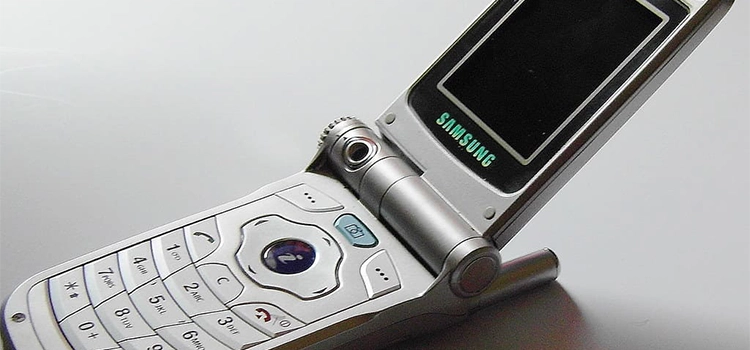
Samsung’s SCH-V200 followed in South Korea in 2000. It had a 0.35-megapixel camera capable of taking 20 photographs, but unlike the Kyocera and Sharp models, it could not send photos over the phone network.
Sharp’s J-SH04, released in Japan later in 2000, could also send photographs over a mobile network and is often described as the first successful mass-market camera phone. These distinctions explain why different histories nominate different models rather than one uncontested “first”. See IEEE camera-phone timeline for this comparison.
10. The largest camera collection contains 5,707 cameras
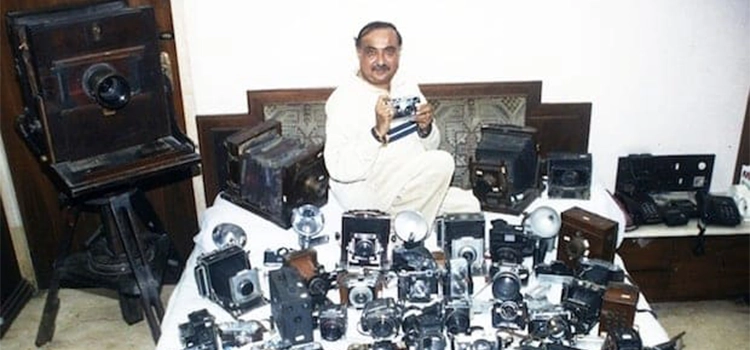
Camera-collection records change as collections grow and new evidence is verified. Guinness World Records reported in June 2025 that Arcot Vasantha Rao Arun of India had achieved the record for the largest collection of cameras, with 5,707 cameras verified in Chennai on 6 April 2025.
This replaces the older figure of 4,425 cameras associated with former record holder Dilish Parekh, which remains common in older articles. Guinness describes Arun’s collection as spanning cameras from the 1870s to the 2020s. The total, holder and verification details appear in the active Guinness World Records article about the 5,707-camera collection.
As with any record, 5,707 is a verified total at a particular point in time, not a permanent maximum. A future claim would need to be assessed and recognised by the record authority before it replaced this figure.
A useful digital detail: photographs can carry EXIF metadata
Many digital cameras save Exchangeable Image File Format, or EXIF, information within an image file. Depending on the device, file type and settings, this can include the camera model, date, exposure time, aperture, ISO setting, focal length and orientation. Location data may also be included when geotagging is enabled.
This metadata helps photographers organise images and understand which settings produced a result. For example, comparing a sharp photograph with a blurred one may reveal that the sharper frame used a faster shutter speed. Comparing image noise may show how results changed at different ISO settings.
Metadata can also create a privacy risk when files are shared, particularly if precise location information identifies a home, school or sensitive site. Check whether location data is present before publishing photographs. Editing applications, messaging services and social platforms may preserve, alter or remove metadata, so do not assume that every service treats it in the same way.
FAQs
What is one of the most viewed photographs?
Charles O’Rear’s 1996 photograph Bliss, used as the default Windows XP wallpaper, is widely described as one of the world’s most viewed photographs. Its enormous reach is plausible because Windows XP was used globally, but no authoritative worldwide count proves that it is definitively the most viewed photograph ever.
What is the most expensive photograph sold at auction?
Man Ray’s Le Violon d’Ingres sold for US$12.4 million at Christie’s New York in May 2022. Christie’s reported it as a world auction record for a photograph. Private sales cannot necessarily be compared because their prices and terms may not be public.
When was the first photographic self-portrait made?
Robert Cornelius made a daguerreotype self-portrait in Philadelphia in 1839. The Library of Congress describes it as one of the earliest photographic portraits of a person and the earliest extant American portrait photograph.
Does a camera flash always improve a photograph?
No. Flash can illuminate a dark subject or reduce shadows, but it may also flatten texture, create reflections or overpower ambient light. The best choice depends on distance, exposure, subject movement and the desired result. Modern electronic flash is fundamentally different from hazardous historical flash powder.
Who invented photography?
No single person created every part of photography. Niépce produced the earliest surviving camera photograph; Daguerre developed the daguerreotype; and William Henry Fox Talbot developed an influential negative-to-positive process. Photography emerged from multiple advances in optics, light-sensitive chemistry and image fixing.
Conclusion
Photography’s history is a sequence of connected advances rather than a neat collection of isolated inventions. The camera obscura explained image projection; chemistry made images permanent; colour experiments separated and recombined light; electronic sensors converted light into data; and mobile networks made photographs immediately shareable.
Understanding how each process worked makes these milestones more useful—and helps distinguish documented history from appealing but inaccurate internet claims. It also explains why words such as “first”, “largest” and “oldest” should be tied to a clear definition and a current source.
To develop practical skills in composition, lighting and editing, explore Lead Academy’s Online Photography Courses Bundle.
Sources and editorial note
This educational article was prepared by Lead Academy’s editorial team using records from museums, cultural institutions, scientific organisations, manufacturers, regulators and record authorities. It does not imply specialist peer review. Historical dates and “firsts” are qualified where institutions use approximate dates or where the answer depends on the definition.
- Harry Ransom Center: The First Photograph
- Bavarian National Museum: Daguerre’s Boulevard du Temple triptych
- National Science and Media Museum: The history of colour photography
- Nobel Prize: 2009 Physics Prize and the CCD sensor
- IEEE: First Mobile Camera Phone Released
- Guinness World Records: Arcot Vasantha Rao Arun’s camera collection
- Health and Safety Executive: L150 guidance on the Explosives Regulations 2014
What to Read Next:
- How to Become a Plumber in the UK: Routes, Qualifications and Pay
- How to Become an Ethical Hacker: A UK Career Guide
- 10 Highest Paying Jobs in the UK 2025: Salary & Skills
- 50 Examples of Transferable Skills for Your CV
- How to Become an Architect in the UK: Qualifications and Routes
- How to Access Tesco Work & Pay and View Your Payslip
- 20 Jobs That Can Pay Well Without a Degree in the UK