
Makaton Signs and Symbols: A Safe Beginner’s Guide
BSL

Makaton is a communication programme that uses speech alongside signs and graphic symbols. It can help some children and adults understand language, express choices and take part in everyday interactions.
It is not a sign language and should not be treated as a simplified form of British Sign Language (BSL). BSL is a complete natural language used by the Deaf community, with its own grammar and cultural context. Makaton usually follows the word order of the spoken language being supported.
This guide is an educational overview based on current guidance from The Makaton Charity and other UK organisations. It cannot determine whether Makaton is suitable for a particular person. That decision should be personalised with a speech and language therapist, licensed Makaton Tutor or the person’s communication team.

Makaton and BSL at a glance
| Feature | Makaton | British Sign Language |
|---|---|---|
| What it is | A communication programme | A natural sign language |
| Main modes | Speech, signs and graphic symbols | Handshapes, movement, location, facial expression and body movement |
| Grammar and word order | Signs normally accompany speech and follow the spoken language’s word order | BSL has its own grammar and is not signed English |
| Typical purpose | Supporting understanding and expression according to an individual’s needs | Communication in BSL, particularly within the Deaf community |
| Can one replace the other? | No | No |
Important: Makaton is not an appropriate substitute for BSL when communicating with a Deaf BSL user. Ask the person which language and communication support they prefer, and arrange a qualified BSL interpreter where required.
If you want to understand BSL on its own terms, read our guide on how to learn BSL. The British Deaf Association resources also explain BSL, Deaf culture and communication access.
How the Makaton communication programme works
Makaton is multimodal. A person may use or receive spoken words, signs, symbols, facial expression, gesture and other visual information. These channels can reinforce one another, but the balance should reflect the person’s abilities, preferences and communication plan.






Speech and signs
The communication partner normally speaks while signing key concepts. They do not necessarily sign every word. For example, in a request such as “Would you like a drink?”, a communication plan might identify “like” and “drink” as the concepts to emphasise. Which words are signed depends on what the individual needs to understand or express.
Makaton signs draw on signs from the relevant country’s Deaf community. In the UK, signs are drawn from BSL. This does not make Makaton a dialect of BSL, because Makaton signs accompany spoken language rather than using BSL grammar.
Graphic symbols
Makaton symbols are designed to give a visual representation of a concept. Depending on the person’s plan, they may be used on choice boards, schedules, labels, communication books or digital devices. A symbol can remain visible after speech or a sign has finished, which may give someone more time to process the message.
Symbols should be introduced meaningfully rather than displayed without context. For example, a symbol for “drink” may be shown when offering a drink, then placed on an accessible choice board for the person to select later.
Core Vocabulary and Resource Vocabulary
The programme is organised around a Core Vocabulary of useful everyday concepts, taught in stages, with a larger Resource Vocabulary for additional topics. The Makaton Charity states that its Resource Vocabulary contains more than 11,000 additional signs and symbols. This describes one part of an expanding collection rather than a fixed total for the whole programme.
The Charity’s official Makaton overview explains its structure, intended use and routes to formal training.
Who may benefit from Makaton?
Makaton may support some people with speech, language and communication needs. Users can include autistic people, people with learning disabilities and people whose speech is limited, developing or difficult for others to understand. Some people use it for a short period while others continue to use it throughout life.
A diagnosis alone does not establish that Makaton is suitable. Two people with the same diagnosis may communicate very differently. Assessment should consider the person’s understanding, motor and sensory needs, vision, hearing, literacy, existing communication methods, environment and preferences.
Makaton is also not the only option. A person might benefit from objects of reference, photographs, symbol boards, communication books, speech-generating devices, writing, BSL or another augmentative and alternative communication approach. These methods can sometimes be combined.
The NHS explains that a speech and language therapist can assess communication needs and work with the individual, family and support team. See the NHS therapy guidance for an overview of this professional role.
A safe, practical way to get started
The aim is successful communication, not perfect performance. Use the following staged routine only as general guidance, then adapt it to the individual’s assessed plan.

1. Start with the person’s priorities
Identify a few useful concepts linked to daily life. These might include a preferred person or activity, “more”, “finished”, “help”, “stop”, “toilet”, “drink” and “pain”. Do not choose vocabulary solely because it appears on a generic beginner list.
Include words that let the person refuse, pause and ask for assistance. Communication should give someone greater control, not merely make it easier to follow instructions.
Signs involve more than a static handshape. Their movement, location, direction, orientation and facial expression may affect meaning. Learn from a licensed Makaton Tutor or an authorised demonstration rather than copying an unverified drawing or written description.
This article deliberately does not reproduce Makaton line drawings or symbols. Those materials are protected by copyright, and an image found through a web search is not automatically licensed for publication or reuse.
3. Model communication naturally
Say the word while producing its sign, at a pace the person can follow. Keep the message clear, allow processing time and respond to all purposeful communication, including gesture, gaze, vocalisation, speech, signing or pointing to a symbol.
Natural eye contact may help some people, but it should not be demanded. An autistic person or someone with sensory differences may listen and understand without looking directly at the speaker.
4. Make symbols accessible
Place agreed symbols where the corresponding communication happens. A portable communication book may be more useful than symbols fixed to one wall. Check that size, contrast, layout and positioning suit the user’s vision and physical access.
5. Pause and acknowledge the response
After modelling a word or offering a choice, pause without repeatedly prompting. Acknowledge the person’s response even if it differs from the model. If communication is misunderstood, clarify calmly rather than treating the attempt as a failure.
6. Use the same agreed approach across settings
Families, educators, carers and clinicians should know which signs and symbols are in the plan and what they mean for that person. Record updates so that communication remains consistent while still allowing for preferences in different settings.
British Sign Language (BSL) Level 1 & 2 Course Online
- Accredited Courses
- Tutor Support Included
- 3 Installment Plan at checkout
- 14 Days Money Back Guarantee
7. Review what is working
Notice whether the person initiates more often, understands routines, expresses refusals or experiences fewer communication breakdowns. If a method is unused or appears stressful, ask the communication team to review it. Lack of progress should not be blamed on the user.
Physical prompting, consent and safeguarding
Do not take or move a person’s hands to make them sign simply because they are learning Makaton. Hand-over-hand prompting can remove control, cause distress and teach compliance rather than independent communication.
Any tactile or physical support must follow an individually assessed communication plan and competent professional guidance. It should respect consent, dignity, safeguarding needs and the person’s right to withdraw at any time. Never restrain, force or repeatedly reposition someone’s hands.
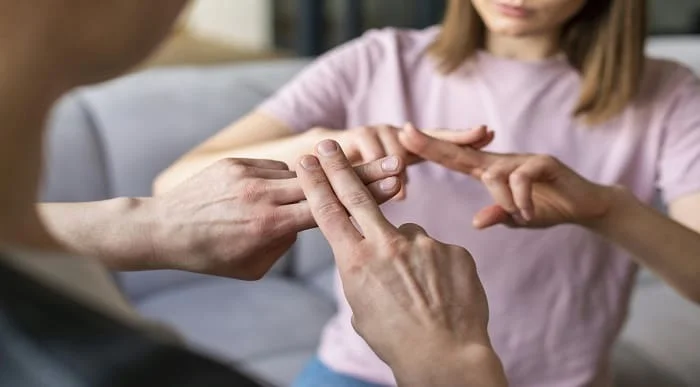
Modelling the sign yourself is generally a less intrusive starting point. Where a professional specifically recommends tactile support, they may consider an approach that gives the person more control, such as allowing the learner to place their hands on or near the communication partner’s hands. The exact approach must still be personalised and agreed.
A communication-plan checklist
This checklist can help families and staff prepare useful questions for a therapist, licensed Makaton Tutor or wider communication team:
- Purpose: What does the person need to understand or express?
- Preference: How do they already communicate, and which methods do they prefer?
- Access: Can they see, reach, distinguish and use the proposed signs or symbols?
- Vocabulary: Does the plan include choices, refusals, feelings, pain, help and preferred activities?
- Modelling: Who will model the agreed communication throughout the day?
- Response time: How long should partners pause before repeating or rephrasing?
- Consent: How will acceptance, refusal and withdrawal be recognised?
- Consistency: Where is the current vocabulary list stored and how are updates shared?
- Review: Who will monitor usefulness, comfort and changing needs?
- Alternatives: Does the person also need a board, device, photographs, writing, BSL or another method?
This mechanism matters because communication support works as a system. Vocabulary, access, modelling, response and review must fit together. Simply teaching a list of signs does not create an accessible communication environment.
Authorised learning and printable resources
For accurate signs, symbols and structured training, use materials supplied or licensed by The Makaton Charity. Its official free resources include selected downloads and activities. Availability and account requirements can change, so check the page itself before planning a session.

A licensed Makaton Tutor can teach sign production, symbol use and implementation more reliably than an unattributed social media clip. Organisations should also check that staff training and copied resources comply with current licensing conditions.
Avoid downloading unofficial “printable Makaton” sheets. They may contain inaccurate signs, outdated material or copyrighted symbols reproduced without permission. Before using any resource, identify its publisher, date and licence, and confirm that it matches the individual’s communication plan.
Fingerspelling represents letters through hand configurations. It can be useful for names and words for which a signer does not have an established sign, but it is not a replacement for a person’s main communication system.
Our introduction to fingerspelling explains the basic concept. You can also explore the British Sign Language alphabet and compare ASL and BSL.
BSL, Australian Sign Language and New Zealand Sign Language belong to the historically related BANZSL language family. They share some historical features, but they remain distinct languages with their own vocabularies, usage and regional development. Learners should not assume that a sign or fingerspelling convention transfers unchanged between them.
 Do you want to learn the British Sign Language?
Using Makaton in schools and services
Some schools, healthcare providers and public services use Makaton-trained staff, signs or accessible materials. That does not mean every organisation offers the same support or that Makaton suits every service user.

Ask what communication provision is actually available. In health, education and care settings, share the person’s communication passport or current plan where appropriate. Staff should still address the person directly, allow enough processing time and provide the communication method that person needs.
When a Deaf BSL user needs access to a service, a few Makaton signs are not an adequate substitute for communication in BSL. The organisation should establish and meet the person’s communication requirements rather than expecting them to adapt to staff skills.
Frequently asked questions
Is Makaton a sign language?
No. Makaton is a communication programme combining speech, signs and symbols. BSL is a natural sign language with its own grammar and cultural community.
Do you speak while using Makaton?
Usually, yes. The communication partner generally speaks while making signs for important concepts. Some users may express themselves primarily through signs or symbols, so practice must follow their individual plan.
Does Makaton have its own grammar?
Not in the way BSL does. Makaton signs normally accompany speech in the word order of the spoken language being supported. Following English word order does not give Makaton a separate English grammar.
Is Makaton verbal or non-verbal communication?
It is multimodal. It commonly combines the verbal mode of speech with non-verbal modes such as signs, symbols, gesture and facial expression.
Are Makaton signs the same as BSL signs?
Makaton used in the UK draws signs from BSL, but the systems are not the same. BSL uses its own grammar, while Makaton signs normally support spoken language and its word order.
How many Makaton signs and symbols are there?
The Makaton Charity says the Resource Vocabulary contains more than 11,000 additional signs and symbols. This is not best understood as a fixed total for the entire programme because official resources continue to develop.
Can I teach myself from online pictures?
Pictures alone cannot reliably show movement, direction, placement or facial information. Use authorised demonstrations and, where possible, learn from a licensed Makaton Tutor. Do not copy or republish official symbols without permission.
Should I move a learner’s hands into position?
Not as a routine teaching method. Model the sign and allow the person to respond. Any physical support must be individually assessed, professionally guided, consensual and easy to stop.
Can Makaton replace a communication device?
Not automatically. Signs may be inaccessible in some situations or to some communication partners. A person may need Makaton alongside a communication board, speech-generating device or another method. Seek individual assessment before changing or removing an established aid.
Key takeaway
Makaton can provide useful visual and gestural support when it is selected and implemented around an individual’s needs. Start with meaningful vocabulary, model rather than force, respect every form of communication and use authorised learning materials.
Most importantly, distinguish Makaton from BSL and from other communication approaches. The best system is not the most familiar one. It is the combination that gives the person reliable, dignified and effective ways to understand others and express themselves.
What to Read Next:
- How to Learn BSL: A Beginner-to-Advanced Guide
- What’s the Difference Between ASL and BSL?
- Why Is British Sign Language Important?
- British Sign Language for Beginners: A Practical BSL Guide
- British Sign Language Alphabet: An A–Z Guide to BSL Fingerspelling
- What Is Fingerspelling in BSL? A Beginner’s Guide
- How Long Does It Take to Learn BSL? A Practical Study Guide