Face-to-Face Training Session
to provide you with the top notch learning experience

4 Instalment Plan on checkout
You have the option to choose from four easy instalment plans.
14 Days Money Back Guarantee
Hassle-free guarantee on purchase, ensuring quality & your peace of mind.
Face-to-Face Training Session
to provide you with the top notch learning experience
4 Instalment Plan on checkout
You have the option to choose from four easy instalment plans.
14 Days Money Back Guarantee
Hassle-free guarantee on purchase, ensuring quality & your peace of mind.
Course Fee
£169
£280
40% OFF
 Accredited Certificate Included

 Course Structure
 In-House


Special Discount – Extra 10% Off for all NHS Staff
This CPD-accredited ECG training aims to enhance your knowledge of cardiac anatomy and physiology. The experienced healthcare professional will help you learn how to record an ECG trace, interpret ECGs, identify problems of rate and rhythm, myocardial infarction, diagnostic testing following an abnormal ECG, and cardiac muscle disease and congenital heart disease.
This ECG Interpretation course covers a wide range of physiology and anatomy to guide healthcare professionals. Whether you are a nursing student or a healthcare associate, this training will teach the basics of anatomy, how to identify ECG readings, keep track of the ECG recording, and many more related topics.
If you are an aspiring healthcare expert, our course will help with practical and theoretical knowledge. It also covers the underlying reasons for irregular or abnormal ECG readings. Taking this course will upgrade your career as a healthcare worker.
Upon completing this course, you will get a professional CPD-approved certificate in ECG training, which can elevate your career and get you better opportunities.
The assessment will be conducted during the face-to-face training through observation and questionnaires. You must answer 20 questions and achieve at least 70% to receive a CPD certificate.
If you want to be an expert in Venepuncture Phlebotomy, and Cannulation, you can also join Venepuncture, Phlebotomy, and Cannulation Training London.

The CPD Quality Assurance is one of the UK’s leading providers of accredited training. A CPD-accredited certificate shows that you have completed recognised professional training and can help build confidence with employers, clients, and insurance providers.
Success Story

 Customer Reviews

 Verified
Heart Training With Purpose
As a prospective learner, I appreciate the mix of heart physiology and hands-on 12-lead practice. It makes the subject feel less intimidating.
VerifiedA Goal Worth Pursuing
Having a 20-question assessment and practical observation gives me a clear goal. I feel motivated to work towards the certificate.
VerifiedConfidence Starts With Clarity
Working through normal readings and common abnormalities sounds like a sensible way to build confidence. I'm looking forward to learning more.
VerifiedMotivated To Learn More
Follow-up diagnostic testing after an abnormal result is included, which makes me feel more motivated to explore ECG interpretation.
VerifiedReady To Build Skills
Knowing I'll learn how to set up the ECG machine and recognise key intervals makes me feel more confident about starting.
VerifiedRelevant Skills For Healthcare
Accurate ECG recordings and recognising abnormal readings are both covered, which makes this course feel relevant to healthcare work. I'm encouraged.
VerifiedAn Encouraging Course Outline
Seeing normal ECG readings covered alongside common abnormalities makes the subject feel more manageable. I'm genuinely encouraged to learn more.
VerifiedA Promising Clinical Step
The training outline makes the healthcare worker's role in ECG recording clearer, and I feel more motivated to learn.
VerifiedA Closer Look at Traces
Waves, intervals and segments seem less mysterious with the course's structured coverage. I feel motivated to develop my understanding further.
VerifiedMore Optimistic About Interpretation
Practising 12-lead recordings in a face-to-face session sounds helpful; I’m feeling more optimistic about tackling ECG interpretation.
VerifiedEncouraging Focus On Fundamentals
The eight-hour practical session sounds worthwhile, and I'm excited to build confidence recognising basic ECG waves, intervals and segments.
VerifiedA Thoughtful Training Programme
I'm pleased the syllabus brings heart physiology together with identifying irregular readings, giving me a useful way to develop my skills.
VerifiedEquipment Skills and Interpretation
I'm encouraged by the prospect of learning equipment setup alongside ECG intervals and segments; the practical focus makes this course appealing.
VerifiedReassuring Scope For Learning
The inclusion of rate and rhythm problems alongside myocardial infarction gives the syllabus useful depth. I'm encouraged to learn more.
VerifiedReassurance For Future Practice
Learning about 12-lead recordings and abnormal results sounds reassuring; I'd feel more confident knowing when to refer a patient.
VerifiedBreadth That Inspires Confidence
Seeing myocardial infarction and follow-up diagnostic testing included makes me feel more confident about the breadth of this ECG training.
No. The course has open enrolment and is designed for complete beginners as well as staff refreshing their skills. No prior qualifications or pre-course learning is required.
It runs over two days, from 10:00 to 17:00 each day, and carries 11.5 CPD hours.
Yes. The course is CPD Quality Assurance, and your CPD Quality Assurance certificate is issued on completion with no expiry date.
A systematic approach works best. Check the heart rate, then the rhythm, then the PR and QRS intervals, then the QRS complex, the ST segment and the T waves, before forming an overall impression and checking for any red-flag patterns that need escalation. This is the exact method taught and practised on the course.
An ECG records the heart's electrical activity. It shows the heart rate and rhythm and the timing of electrical conduction, and it can reveal changes linked to ischaemia, previous cardiac damage, electrolyte disturbance or arrhythmia.
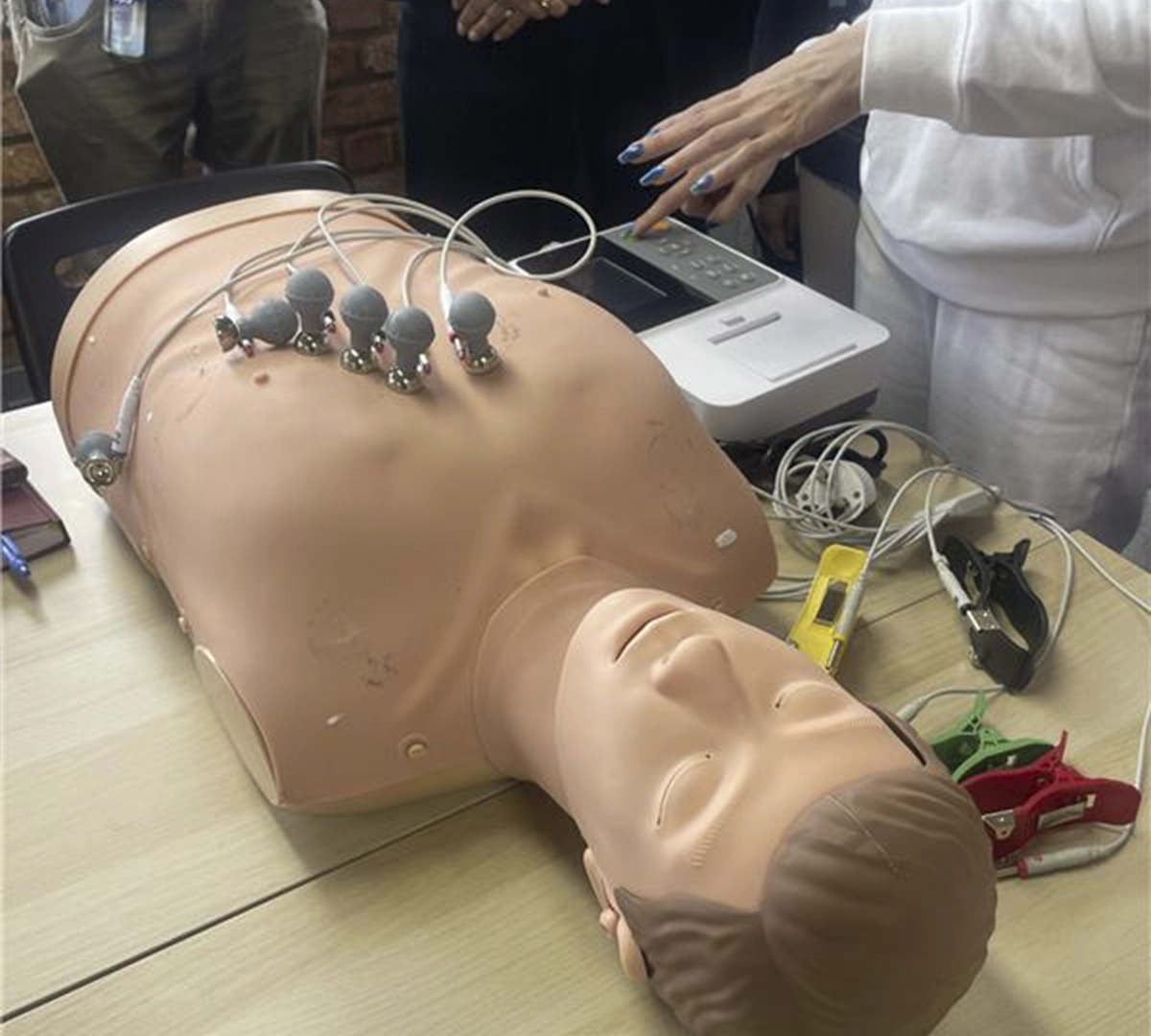
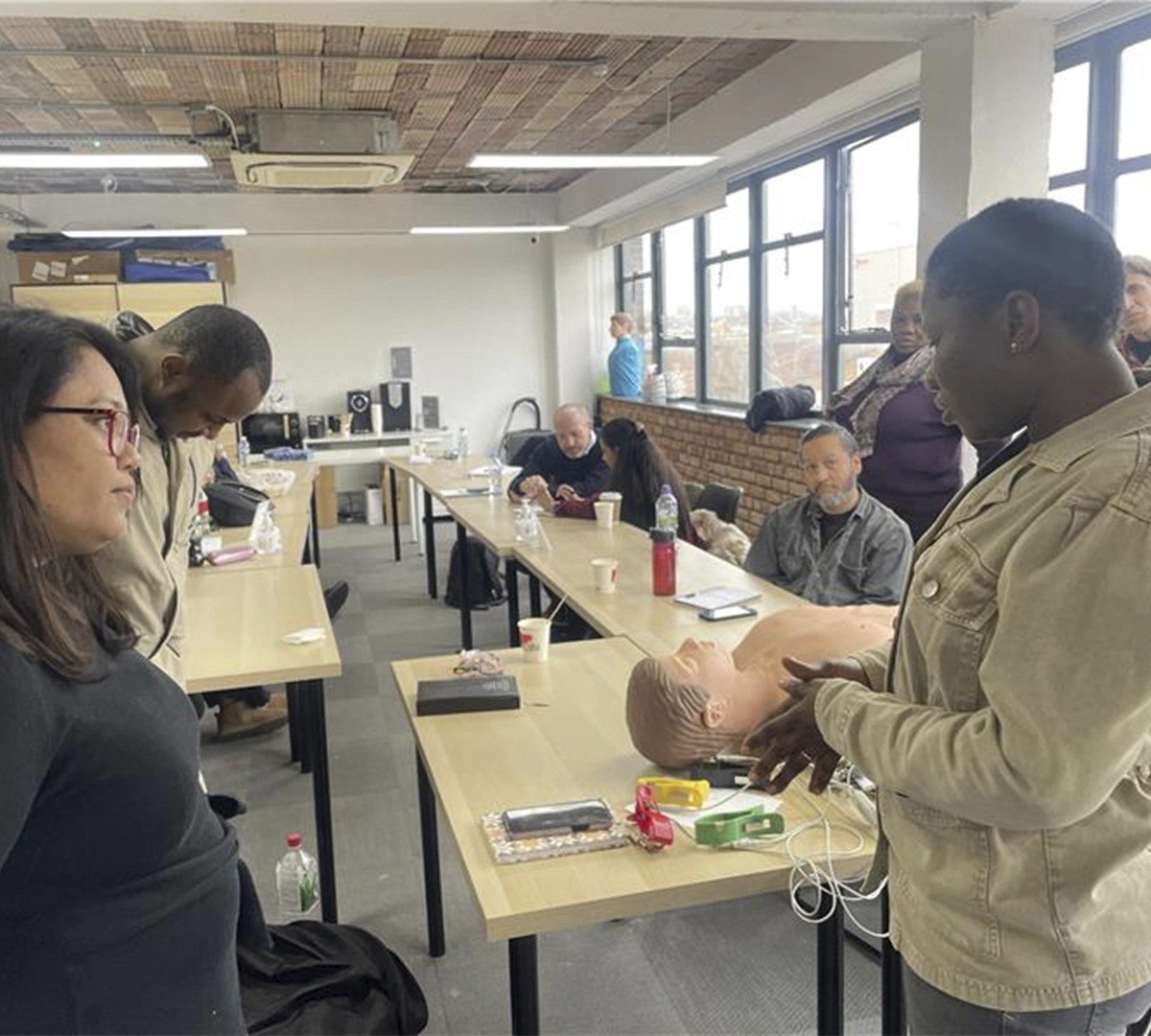
Yes. You work with real clinical ECG machines, leads and manikins throughout the practical sessions. Where volunteers are happy to take part, you also practise recording with peers.
Yes. Nurses, student nurses, healthcare assistants and nursing associates are among the most common learners on the course.
You complete a written MCQ and a practical, observation-based assessment. Learners are graded as 'competent' or 'not yet competent' and must pass both parts to receive the certificate.
Yes. NHS staff receive an extra 10% off the course fee. Instalment plans and a 14-day money-back guarantee are also available.
Yes. If you do not meet the required standard, you can retake the assessment. With expert-led, hands-on training, our pass rate is very high, so this is rarely needed.
Yes, you'll work with real clinical ECG machines, leads, and manikins throughout the day. You'll also practise recording with peers where volunteers are happy to take part.